
What a Commercial Chain Link Fence Costs, and How to Spec It
A plain 6-foot commercial chain link fence runs $55 to $70 a foot installed. The price changes with the frame, the wire on top, the wire gauge, the mesh size, the edges, and the coating.

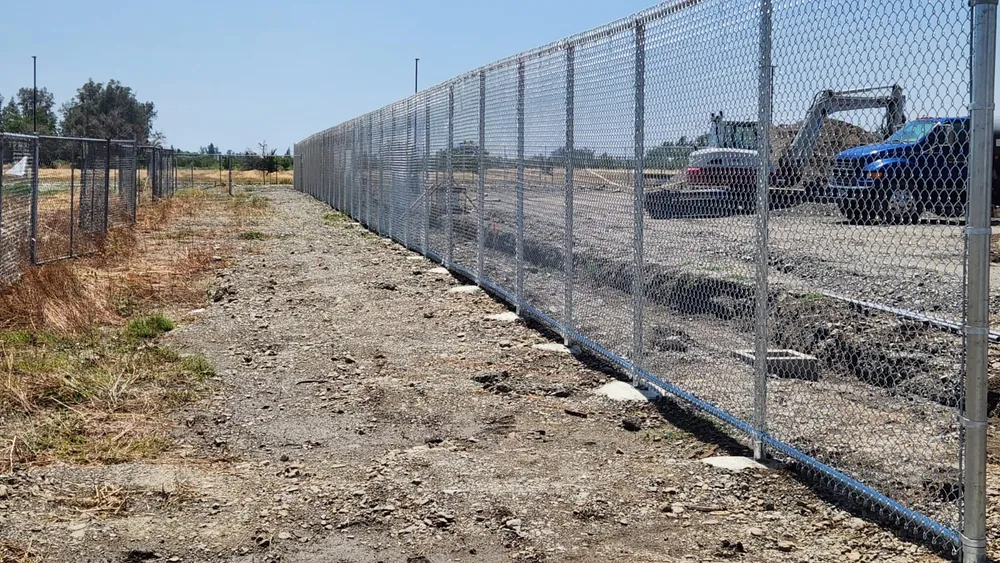
A commercial chain link fence can be built many ways, and each choice changes the price. The top and bottom of the fabric can be held by tension wire or by one, two, or three rails, and the top of the fence can carry barbed wire and razor wire. The fabric comes in different wire gauges and mesh sizes, with knuckled or twisted edges, galvanized or vinyl-coated. This post explains what a chain link fence costs and what each of those options changes.
In this guide
What it costs per foot
A short run costs more per foot, because the trip and the setup cost the same on 60 feet as on 600.
The frame
The fabric is stretched between steel posts set about 10 feet apart, and its top and bottom are held by a steel rail or by a tension wire. A rail is pipe, so it holds the fabric stiffer than a wire.
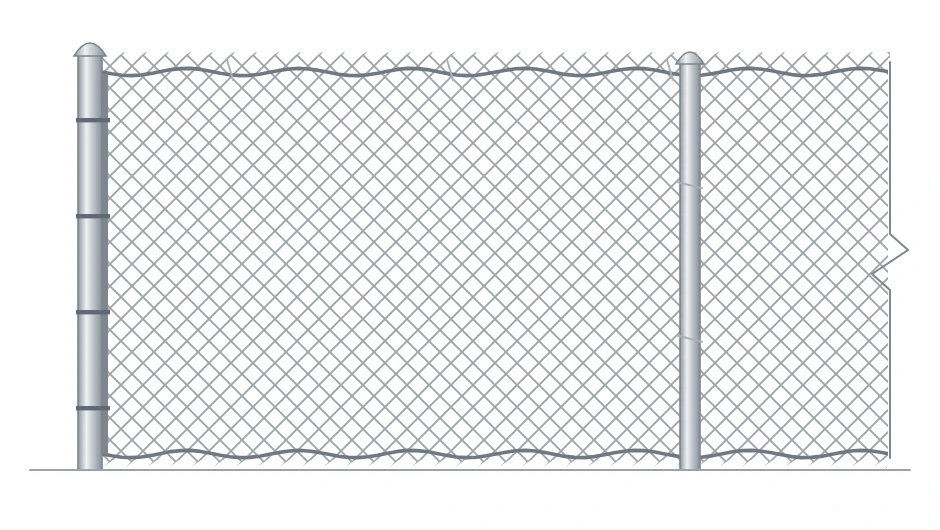
Tension wire at the top and bottom
A heavy steel wire is pulled tight along the top and the bottom of the fabric, from post to post. It is the weakest of the frames.
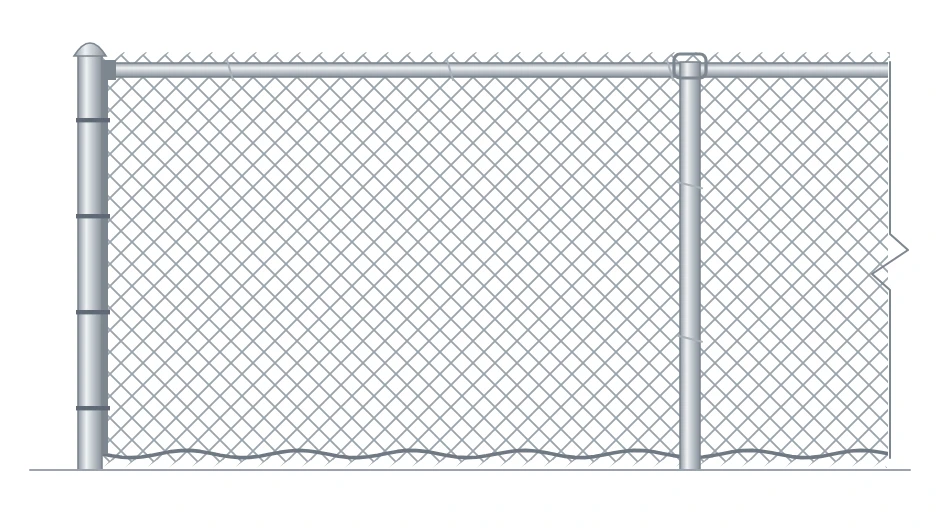
Top rail, tension wire at the bottom
A steel pipe runs along the top of the fabric, and a tension wire holds the bottom. The top of the fence is stiffer than with a wire.
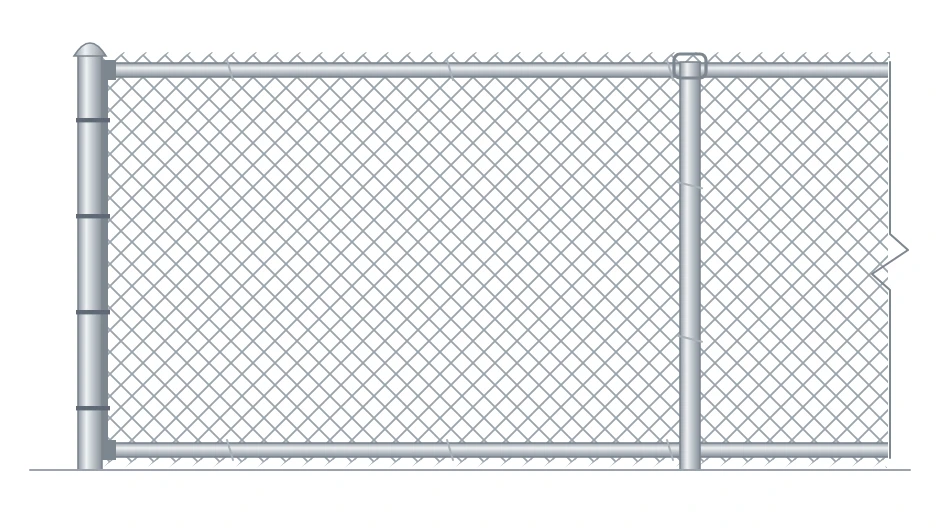
Top rail and bottom rail
Steel pipe runs along both the top and the bottom of the fabric, so both edges are stiff. This frame is common on highways and in yards.
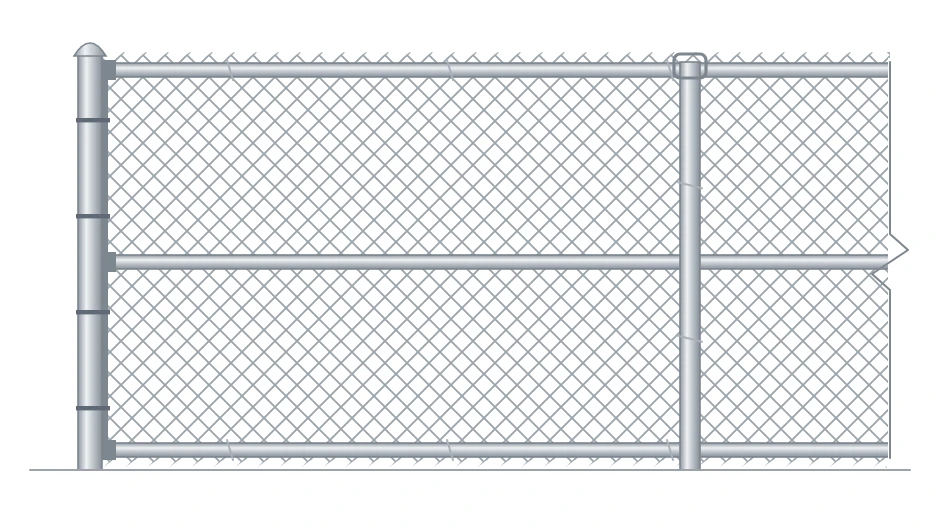
Top, mid, and bottom rail
A third pipe runs across the middle of the fabric. It is the strongest of the frames.
Height
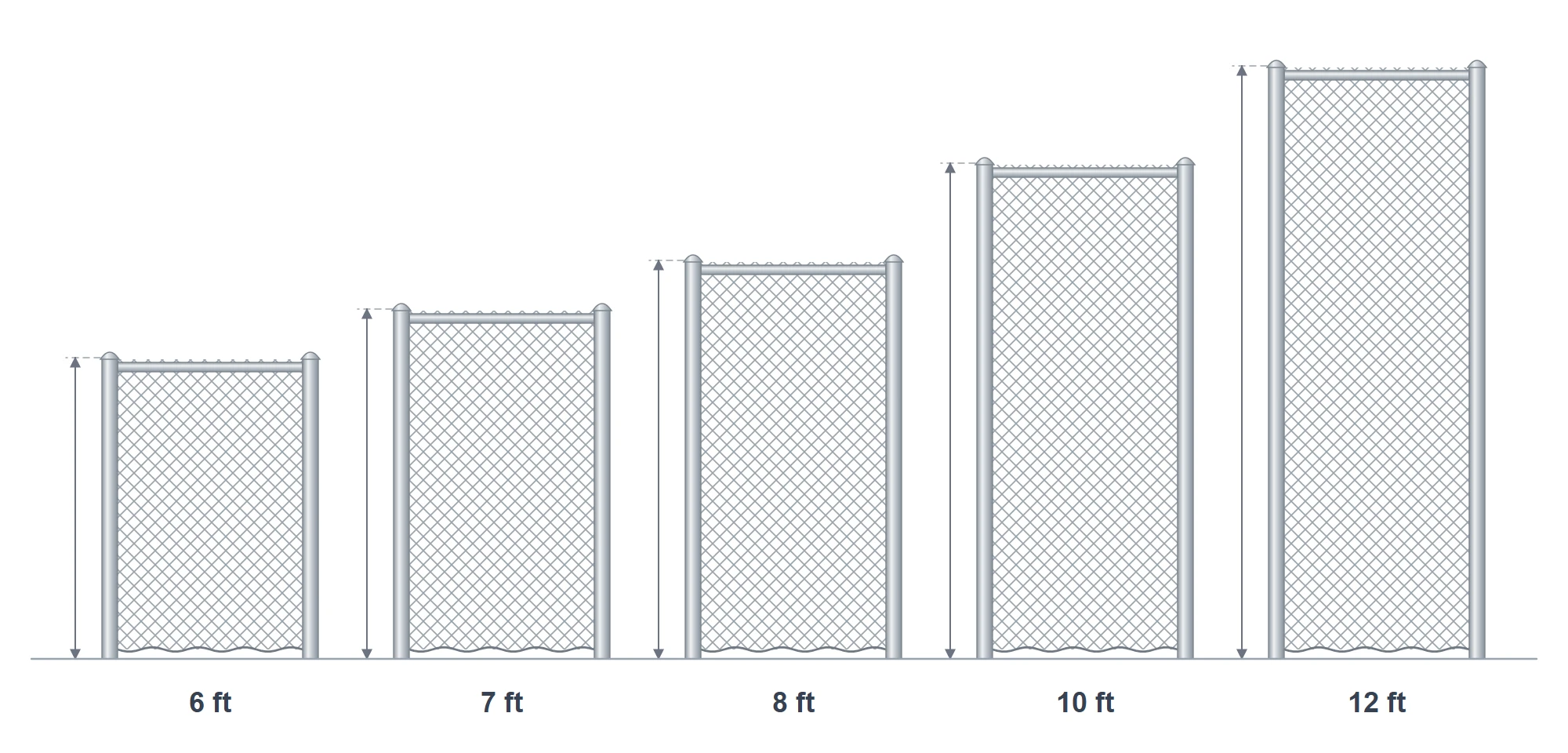
Chain link fences are built in heights from 6 to 12 feet, and 6 and 8 feet are the most common. A taller fence takes more fabric and heavier posts, so the height changes the price per foot.
Barbed wire and razor wire
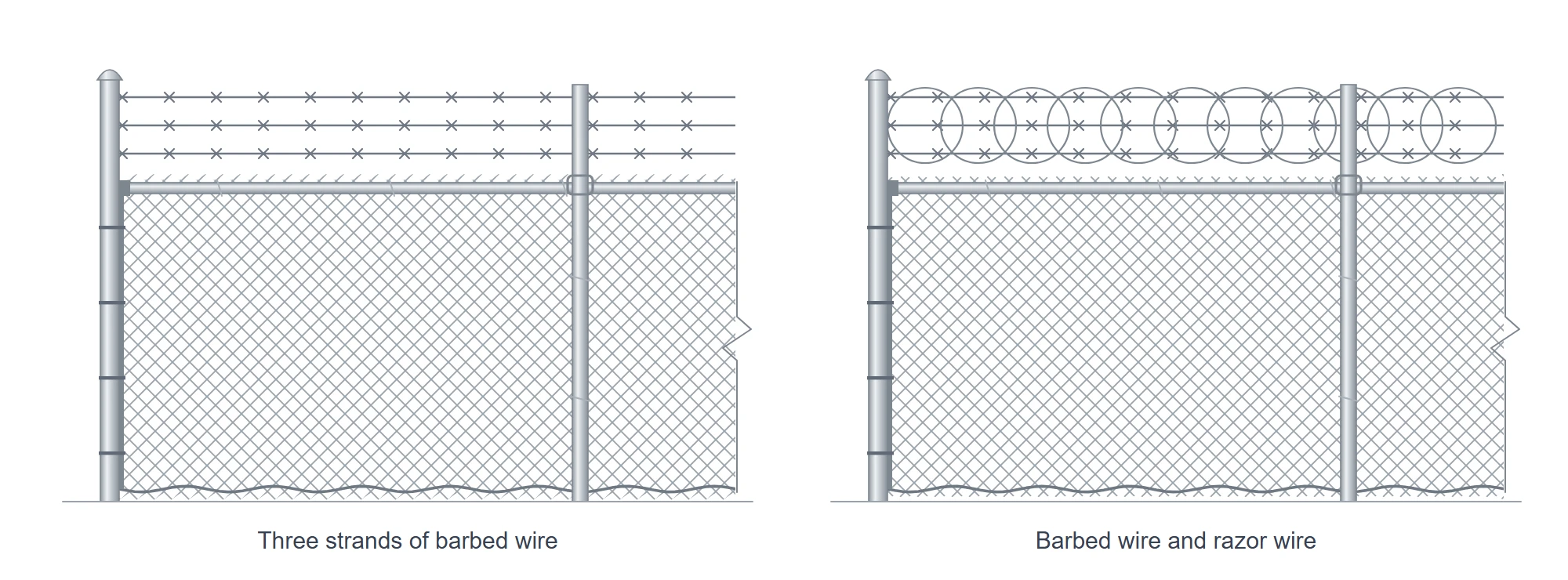
Three strands of barbed wire run on arms at the top of the fence. Razor wire can go on top of the barbed wire.
Gauge and mesh
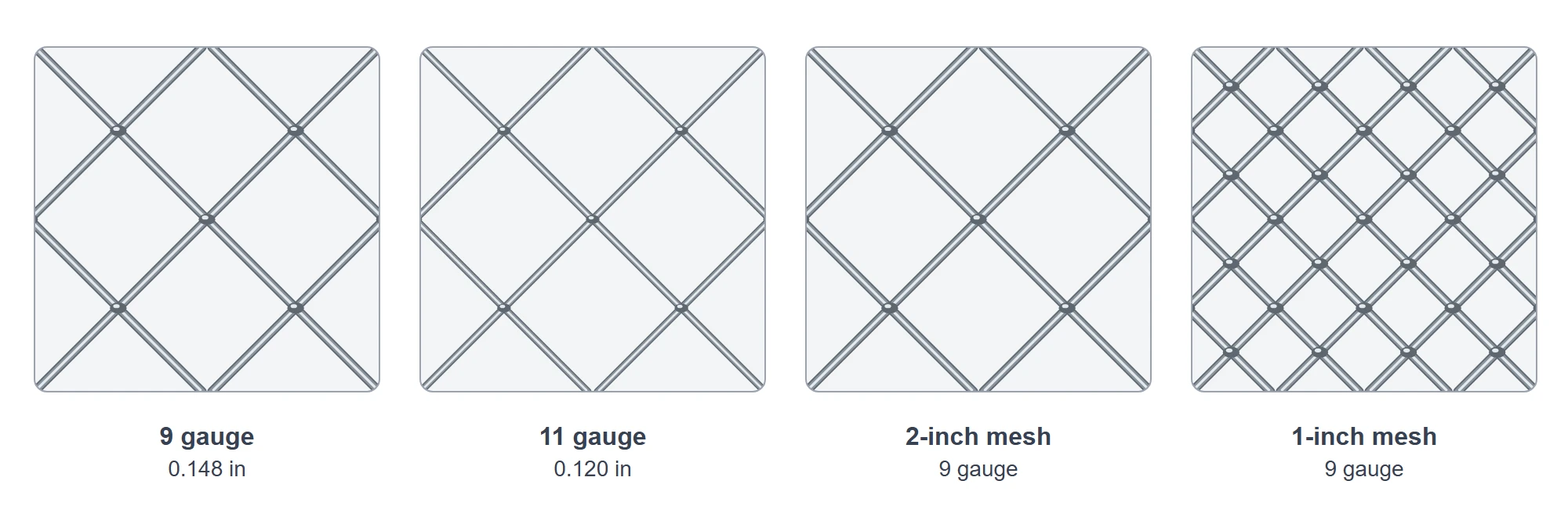
Chain link fabric is made in different wire gauges and mesh sizes. The gauge is the thickness of the wire, and the lower the number, the thicker the wire; 9 gauge and 11 gauge are two common gauges. The mesh is the size of the diamond-shaped opening between the wires. A thicker wire and a smaller mesh both put more steel in every foot of fence, so they change the price.
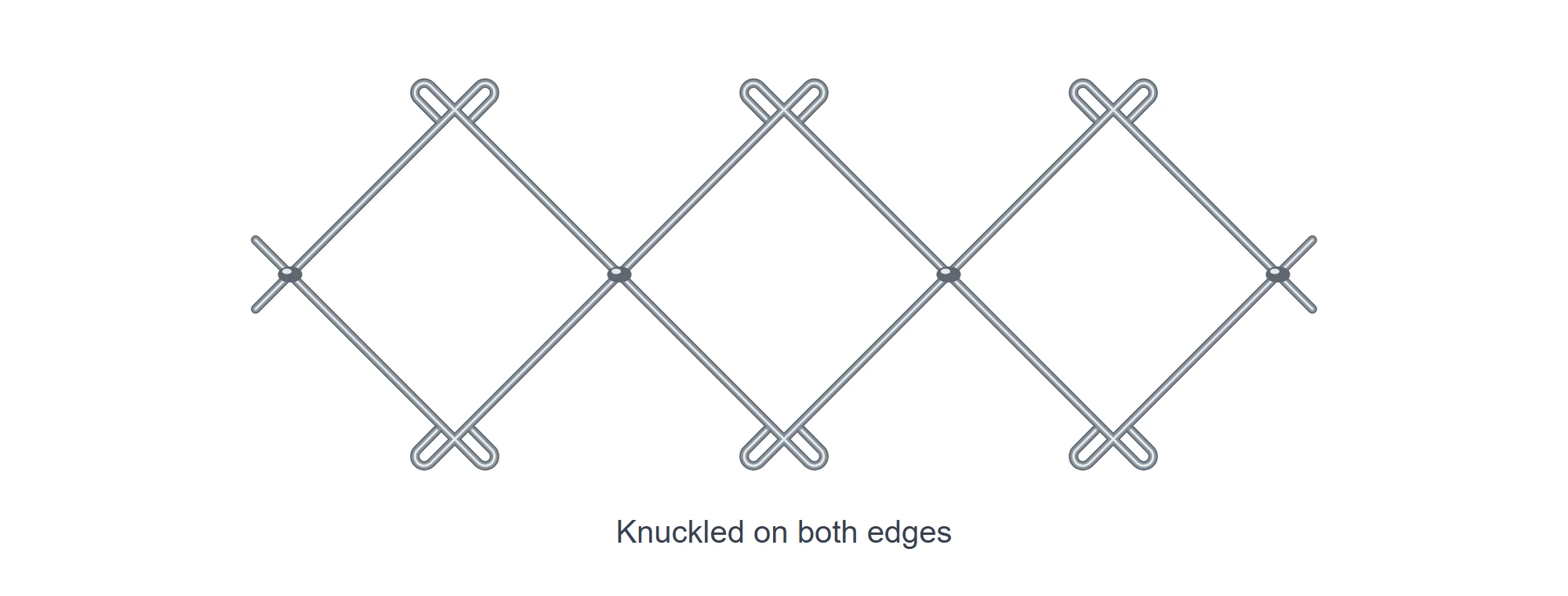
Knuckled or twisted edges
The top and bottom edges of the fabric, the selvage, are finished one of two ways. On a knuckled edge, the two wire ends bend back into hooks that lock together. On a twisted edge, the wire ends are twisted together and leave points. The fabric comes knuckled on both edges, twisted on both edges, or twisted on one edge and knuckled on the other. We usually install it knuckled on both edges.
Galvanized or vinyl-coated
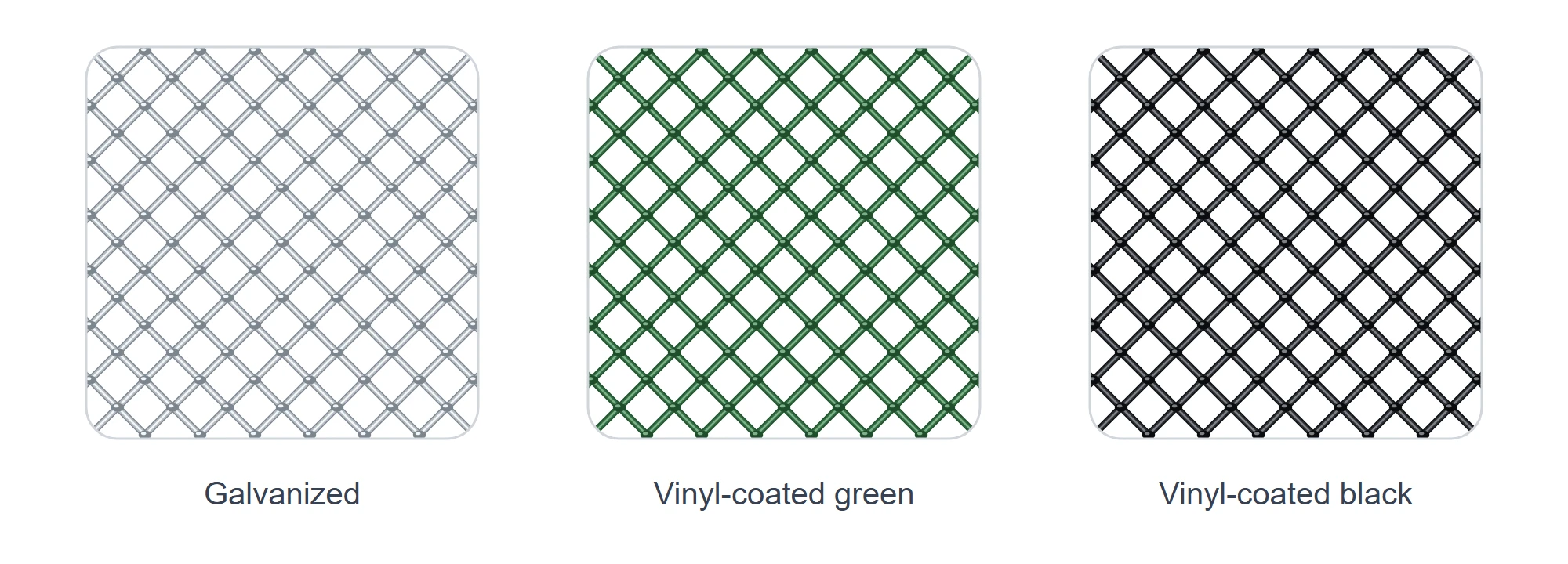
Galvanized fabric is zinc-coated steel, silver in color, and it costs less. Vinyl-coated fabric has a color coat over the galvanizing, so it carries two coatings, and it costs more. It comes in black, green, and other colors, depending on the vendor.
What to send us
To price a chain link fence, we need:
- How many feet of fence, and how tall
- Photos of the site where the fence goes
- The frame, the top, and the coating you need
FAQs
What gauges does chain link come in?
Two common gauges are 9 and 11; the lower number is the thicker wire.
Is chain link the cheapest commercial fence?
Usually. A plain 6-foot commercial chain link fence runs $55 to $70 a foot, and a 6-foot ornamental iron fence mostly runs $70 to $90 a foot.
Galvanized or vinyl-coated, which costs less?
Galvanized.
What is the strongest chain link frame?
A top, mid, and bottom rail.
Where does razor wire go on a chain link fence?
On top of the barbed wire.
How much of the view does a slatted chain link fence block?
About 80 to 95 percent, depending on the slat.
Get a price on a chain link fence
Send us how many feet of fence, how tall, and what goes on top, and we will price it.